Can You Pull Up Your Records from 2022?

Not as a hypothetical. Not as an internal audit exercise.
One operator recently got that call — a potential legal action tied to a unit that was auctioned years ago. Their first move was to go find the file.
What followed is a scenario more operators need to think through before it happens to them.
THE SCRAMBLE NOBODY PLANS FOR
The operator knew the process had been followed. Notices had gone out. The auction had run. The unit had been cleared. But knowing and proving are two very different things … and in the context of a legal challenge, only one of them matters!
When documentation lives across property management system notes, email threads, spreadsheets, and staff memory, "finding the file" isn't a retrieval task. It's a reconstruction project. And the longer the gap between when the work was done and when someone asks about it, the harder that reconstruction becomes.
The question isn't whether your team followed the process. The question is whether you can prove it — years later, under legal scrutiny, without the manager who handled it still on staff.
WHAT A DEFENSIBLE RECORD ACTUALLY REQUIRES
A lien file that can withstand legal review isn't a folder of scans and PDFs.
It's a sequential, timestamped record of every statutory step: notices sent and delivery confirmed, certified mail with proof of mailing, SCRA checks completed and logged, auction compliance verified, tenant communications documented throughout.
Each step has to be traceable — not just proving that it happened, but when it happened, how it was executed, and that it met the specific requirements of your state's lien law at that time. Miss one element, and "we did everything right" becomes difficult to defend.
This is true regardless of how long ago the auction ran.
Legal exposure on a lien doesn't expire the moment the unit is cleared.
THE REAL PROBLEM WITH MANUAL WORKFLOWS
Most operators aren't cutting corners.
The problem isn't intent.. it's infrastructure.
When delinquency workflows are managed through a patchwork of systems, spreadsheets, and staff habits, documentation becomes an afterthought rather than a byproduct of the process itself.
A manager handles a lien, notes it in the FMS, sends a certified letter, tracks a deadline on a spreadsheet. Maybe they email the district manager. Then they leave the company. Or they move to a different location. Or the FMS gets updated and old records migrate imperfectly.
The work might have been done.
But the record of it is fragmented across systems and people who may no longer be there when you need them.
Staff turnover doesn't just create operational gaps. It creates documentation gaps. When the person who ran the process is gone, so is the institutional memory of how it was handled.
HOW AI LEAN CHANGES THE ANSWER
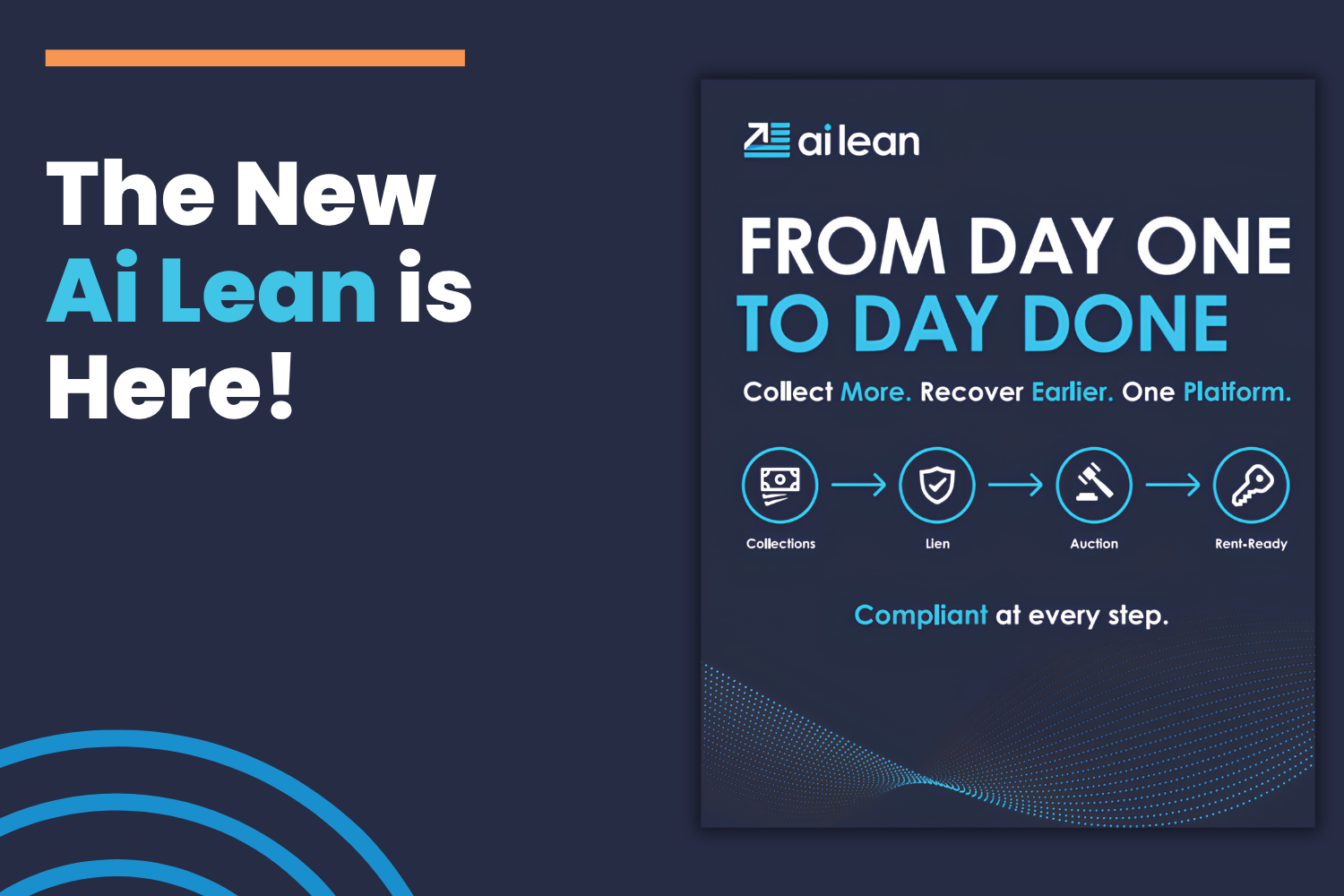
With Ai Lean, documentation isn't something that happens alongside the process.
It's built into it.
Every action is timestamped. Every notice is logged. Every compliance step — SCRA check, certified mail confirmation, auction timeline, tenant communication — is recorded automatically as it happens, not reconstructed afterward.
The audit trail isn't something you have to go create when a legal question arises. It already exists. It's been accumulating since day one of the delinquency workflow, in a centralized record that doesn't depend on which manager handled the file or what system they logged it in.
When that call comes — and for operators running volume across multiple locations over multiple years, it's a matter of when, not if — the answer isn't "let me go find it."
It's "I can pull that up right now."
Ai Lean retains active records in the platform, fully searchable through standard workflows. Historical records are retained in a secure archive for seven years — available for retrieval when needed for compliance, audit, or legal purposes. That's the window that matters for most lien-related legal exposure, and it's covered.
THE QUESTION WORTH ASKING TODAY
Pick a unit that went to auction two or three years ago.
Can you reconstruct the full lien record — every notice, every deadline, every compliance step — in the next ten minutes?
Can the person who handles that request do it without relying on someone else's memory?
If the answer is unclear… that uncertainty is a huge risk.
Not hypothetical.
The operators who are best protected aren't the ones who followed the process most carefully. They're the ones who can actually prove it.
Know Where Your Records Are Before You Need Them
Ai Lean captures a complete, timestamped audit trail for every delinquency workflow — automatically.
See how it works for your portfolio.
Frequently Asked Questions
Q: What records do self-storage operators need to keep for lien compliance?
A: Self-storage operators must retain proof of every step in the lien process, including timestamped tenant notices, certified mail confirmation with proof of mailing, SCRA check documentation, auction compliance records, and a complete timeline of tenant communications. These records must be retrievable years after the fact if a legal challenge arises — and the inability to produce them is treated the same as non-compliance, even if the process was handled correctly at the time. Each state has specific rules, so please consult your state’s lien laws.
Q: How long should self-storage operators keep lien and auction records?
A: Record retention requirements vary by state, but operators should maintain complete, timestamped documentation for at minimum the longest applicable statute of limitations in their operating states — and multi-state operators face the added complexity of those requirements differing across jurisdictions. Ai Lean retains active lien records in the platform for one year, fully searchable through standard workflows. Historical records are then retained in a secure archive for seven years to support compliance, audit, and legal requirements. That seven-year window covers the exposure period for the vast majority of lien-related legal challenges operators encounter.
Q: What happens if a self-storage operator cannot produce lien documentation in a legal dispute?
A: If an operator cannot produce documentation proving a lien was executed correctly — proper notices sent, timelines followed, SCRA checks completed — they may face legal liability even if the process was handled correctly. Courts and opposing counsel do not accept "we believe we followed the process" as a substitute for a retrievable record. The gap between doing the process and proving the process is where legal exposure lives for self-storage operators.
Q: Why do self-storage operators struggle to retrieve old lien records?
A: Most operators manage delinquency workflows across a mix of property and/or facility management system notes, email threads, spreadsheets, and staff memory — which means documentation is fragmented by design. When a manager who handled a lien leaves the company or moves to a different location, the institutional knowledge of how that file was handled often leaves with them. Without a centralized, automated record-keeping system, reconstructing a full lien file years later becomes difficult even when the underlying process was sound.
Q: How does automated lien management software improve audit trail documentation?
A: Automated delinquency and lien management platforms like Ai Lean capture every workflow step in real time — timestamped notices, certified mail logs, SCRA checks, auction compliance records, and tenant communication history — creating a complete audit trail as a natural byproduct of the process itself. Active records remain fully searchable in the platform for one year. Historical records are retained in a secure archive for seven years, available for retrieval when compliance, audit, or legal needs require it. Operators do not have to reconstruct documentation after the fact; the record exists automatically and remains accessible regardless of staff turnover or system changes.
Continue Reading