The Third Option: Recovering Self-Storage Delinquency Without Chasing or Auctioning

For as long as anyone has run self-storage, a tenant who stops paying has left you with two moves: chase them, or auction them.
Most operators made peace with those options as the cost of doing business. They shouldn’t have.
There is a third.
Chasing is a tax on your best people’s time, and it works about as well as whoever happens to be doing it that week. Auctioning is the most expensive way there is to recover a dollar, and most of the time you don’t even recover it. Two moves, both of which lose you money, both of which treat delinquency as a chore to survive instead of revenue to get back.
The third option is to recover the account before it ever becomes a chase or an auction, and to run every stage after that as one connected process instead of a scramble. This page lays out what that looks like, and why it changes the math on delinquency.
WHY THE TWO OLD MOVES BOTH COST YOU
Chasing fails because it is inconsistent by nature. One manager works late accounts one way, a new hire works them another, and when someone is out the sequence stalls. The tenants who would have cured with a timely, firm reminder never get one. Your delinquency number ends up being a measure of your best people, and it moves the day one of them leaves.
Auctioning fails for a simpler reason: it is the most expensive tool you own, and it was never built to get your money back. By the time a unit reaches the block, you have already spent the staff hours, absorbed the lost rent, and taken on the compliance risk. Recovering pennies on the dollar at auction is not a win. It is the smallest possible version of a loss you booked weeks earlier.
Both moves are reactive. Neither is designed to recover revenue. That is the ceiling the whole industry has been operating under.
THE THIRD OPTION: RECOVER, DON’T JUST REACT
The third option starts by reframing delinquency itself. It is not a billing chore to clean up at month-end. It is the first stage of recovery, and what you do in the first few days decides everything downstream.
In practice, that means intelligent collections: reaching the right tenant, at the moment they can actually pay, with the offer that actually works. It keeps the tenants worth keeping and gives the rest a clean exit, early, before an account ever becomes a lien or an auction. It runs the same disciplined way on every account, no matter who is on shift. This is prevention, not triage.
80%
reduction in delinquency at Storage Star, a multi-site Ai Lean operator
Storage Star did it without adding a single hire, and freed up more than 500 hours a month that used to go to manual collection work. In a separate case, a multi-site operator took bad AR from $1M to $120K in 90 days. Not by chasing harder. By making the follow-up consistent and early, so accounts cured before they ever reached the two old moves.
WHAT HAPPENS TO THE ACCOUNTS THAT STILL DON’T PAY
Even the best collections will not cure every account, and the third option does not pretend otherwise. The difference is what happens next. In the two-move world, an un-cured account falls off a cliff into a manual lien scramble and an auction run as a loss.
In the third-option world, compliance has been running underneath the entire time, like a thread through every step. Every notice is on time and on file, every state’s process is followed the same way, so the lien process is consistent and audit-ready rather than reconstructed under pressure. And when a unit does have to reach auction, it is a genuine last resort handled correctly, not the default you fall back on.
RECOVERY IS A SYSTEM, NOT A STACK OF TOOLS
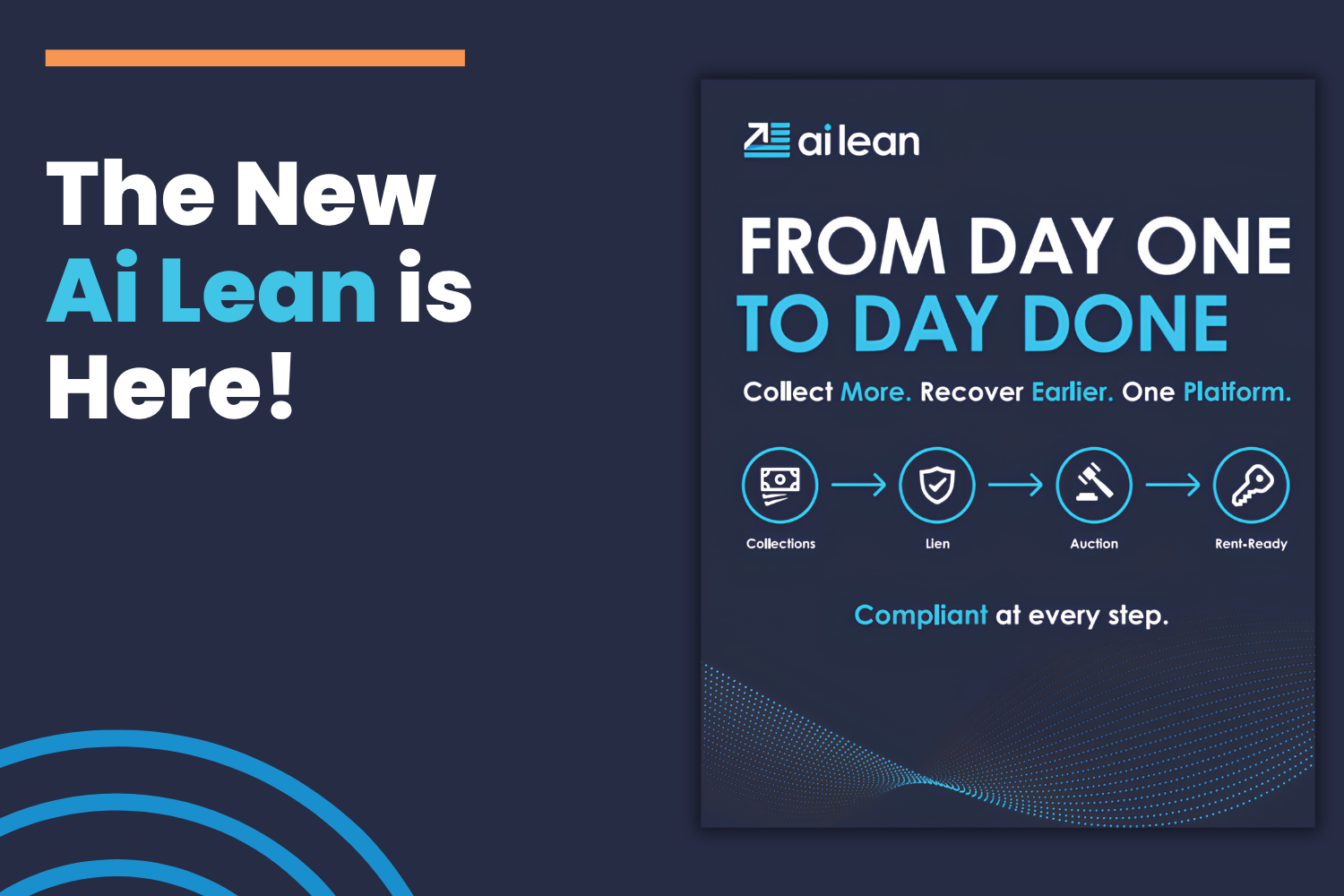
The reason the third option works is that it is one connected process, not collections in one place, liens in another, and auctions with a third vendor. When those stages run as a single system, accounts do not fall through the gaps between tools, and you can see and act on the whole path from the first missed payment to a unit earning again. That is what "from day one to day done" actually means.
You are not buying a better notice engine or a faster auction. You are replacing two reactive moves with one process built to recover.
WHAT THE THIRD OPTION IS WORTH
A two-move operator measures success by how quickly they process delinquency: how fast the list gets cleared. A third-option operator measures something different: how much revenue they recover, how few units land at auction, and how many hours their team gets back. Those are the numbers that show up in NOI.
The two old moves were never a strategy. They were just the only options available. That is no longer true. The two-move era is over.
Gut check: when a tenant stops paying, does your operation have a plan, or two bad options? If the answer is still chase or auction, you are leaving recovered revenue on the table every single month.
See the third option on your operation.
A short walkthrough of what intelligent recovery and in particular, Smart Collections, does to your delinquency, your auctions, and your team’s time.
FREQUENTLY ASKED QUESTIONS
Q1: What are an operator’s options when a self-storage tenant stops paying?
Traditionally, two: chase the tenant with calls and notices, or move toward auctioning the unit. Both are reactive and expensive. Chasing consumes staff time and depends on who is doing it, while auctioning rarely recovers the money owed. A third option is to recover the account earlier through consistent, intelligent collections, so most accounts cure before they reach a lien or an auction at all.
Q2: Why is auctioning a storage unit so expensive?
By the time a unit reaches auction, the operator has already spent staff hours, lost weeks of rent, and taken on compliance risk. The sale itself usually recovers only a fraction of what was owed. Auction is best understood as the most expensive tool in the process, and a last resort, not a recovery strategy.
Q3: What is intelligent recovery in self-storage?
Intelligent recovery treats delinquency as the first stage of a connected process rather than a billing task. It reaches the right tenant at the right moment with the right offer to cure accounts early, keeps compliance consistent underneath, and treats auction as a genuine last resort. Run as one system, from the first missed payment to a unit earning again, it recovers more revenue with less staff time than the traditional chase-or-auction approach.
Q4: How do you reduce self-storage delinquency without adding staff?
Most of the revenue leak in collections comes from inconsistency, not lack of effort. Making follow-up consistent, early, and the same on every account recovers money that manual chasing misses. One multi-site operator cut delinquency by 80% and freed more than 500 hours a month this way, without adding headcount.
Q5: How does recovery work as one process instead of separate tools?
In most operations, collections, lien compliance, and auctions live in separate tools or separate hands, and accounts fall through the gaps between them. Running recovery as one connected system means each stage hands off cleanly to the next, compliance runs continuously underneath, and the operator can see and act on the whole path. Fewer accounts slip, and more revenue is recovered at every step.
Continue Reading