
California’s 2026 Lien Law Changes: Small Updates, Big Operational Impact
⚠️ Update: California Lien Law Changes Effective January 1, 2026
California has implemented two important updates impacting self-storage lien processes:
SB 709 introduces stricter rental agreement disclosure requirements
AB 498 allows email-based lien notices, expanding how operators can communicate with tenants
These updates increase expectations around documentation, communication tracking, and operational consistency—especially for multi-location operators.
California’s 2026 lien law updates—SB 709 and AB 498—introduce new requirements around rental agreement disclosures and allow email-based lien notices. While the legal changes are straightforward, the operational implications are significant. Operators must now ensure stronger documentation, consistent execution across locations, and clear audit trails to reduce compliance risk.
What Changed on January 1, 2026
Two updates are now in effect:
✔️ SB 709 — Rental Agreement Disclosures
Operators must ensure rental agreements clearly outline lien rights, tenant obligations, and enforcement processes. This raises the bar on what must be disclosed upfront—and how consistently it’s applied across locations.
✔️ AB 498 — Email-Based Lien Notices
Operators can now send lien-related notices via email, provided proper consent and documentation exist. This introduces efficiency—but also new expectations around tracking and proof of delivery.
Why This Matters More Than It Seems
On paper, these updates look incremental. In reality, they expose operational gaps.
Here’s where pressure builds:
✔️ Documentation becomes critical
It’s no longer enough to send notices—you need a clear record of timing, delivery method, and recipient.
✔️ Digital communication increases audit exposure
Email is faster—but easier to challenge if consent or delivery records aren’t airtight.
✔️ Consistency across locations gets harder
Multi-site operators must ensure every facility follows the same updated process without deviation.
The Bigger Shift: From Legal Requirement to Operational Discipline
This isn’t just about California.
Across the industry:
States are moving toward more digital communication requirements
Legal experts are advising operators to tighten lien processes proactively
Compliance expectations are shifting toward documented, repeatable workflows
The takeaway:
Lien compliance is no longer a back-office task—it’s an operational system that must run consistently.
Where Operators Are Getting Caught Off Guard
We’re already seeing friction in:
✔️ Rental agreements that don’t meet updated disclosure expectations
✔️ Email notices sent without proper tracking or consent documentation
✔️ Manual processes that weren’t built for digital compliance
✔️ Gaps between legal allowances and real-world execution
What to Do Now
If you operate in California—or plan to—focus on:
✔️ Auditing rental agreements for updated disclosure language
✔️ Confirming tenant consent for email communications
✔️ Reviewing lien workflows (timing, delivery, documentation)
✔️ Standardizing processes across locations
Bottom Line
The 2026 updates signal a broader shift:
More digital communication
More documentation
Less tolerance for inconsistency
Operators who adapt operationally—not just legally—will reduce risk and recover revenue more efficiently.
Still managing lien timelines manually?
That’s where risk starts to compound.
Ai Lean helps operators:
✔️ Automate lien timelines based on state-specific laws
✔️ Track every notice, delivery method, and timestamp
✔️ Maintain audit-ready documentation across all locations
👉 See how it works → Schedule a Demo
Frequently Asked Questions
What changed in California lien laws in 2026?
California introduced SB 709, which strengthens rental agreement disclosure requirements, and AB 498, which allows lien notices to be sent via email with proper consent and documentation.
Can self-storage operators send lien notices by email in California?
Yes. As of January 1, 2026, operators can send lien notices via email under AB 498, but they must ensure tenant consent is documented and delivery records are maintained.
What are the risks of email-based lien notices?
The main risks include lack of documented consent, inability to prove delivery, and inconsistent execution across locations—all of which can increase legal exposure.
How do these changes impact multi-location operators?
Multi-location operators face increased risk if processes are not standardized. Variability in execution can lead to compliance gaps and potential legal challenges.
Do these updates affect existing rental agreements?
Yes. Operators should review and update rental agreements to ensure they meet new disclosure requirements under SB 709.
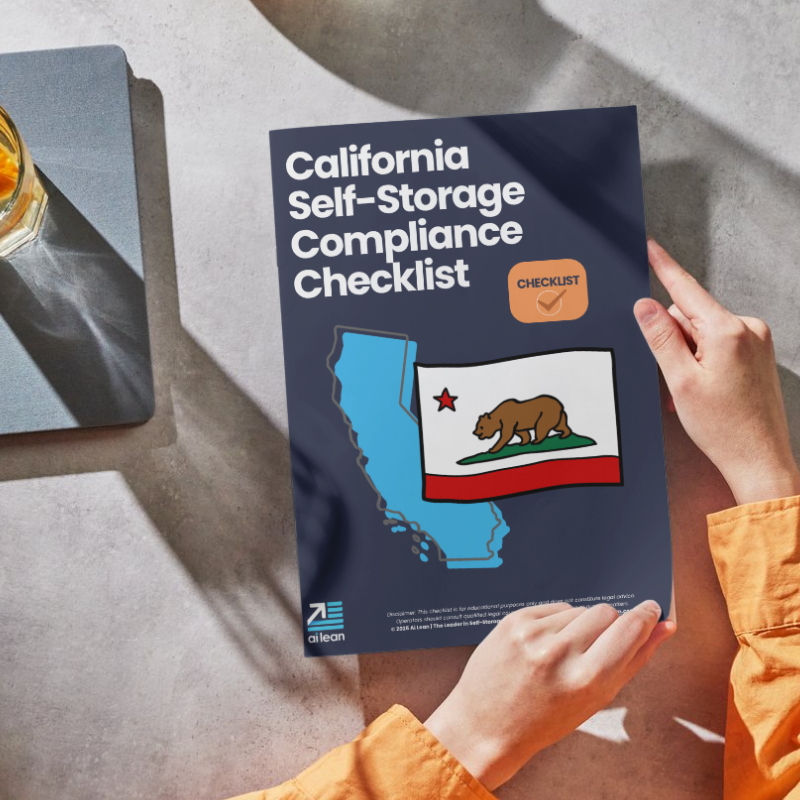
Get Your Copy Today!
Download this 14-page California Self-Storage Compliance Checklist for an overview of lien requirements, notices, publication rules, vehicle procedures, as well as updated 2026 statutory updates.
Disclaimer: This checklist is for educational purposes only and does not constitute legal advice.
-
Self-Storage Compliance Hub
- Jan 20, 2026 California’s 2026 Lien Law Changes: Small Updates, Big Operational Impact
- Jan 9, 2026 Florida Self-Storage Lien Law: A Compliance Guide for Self-Storage Operators
- Dec 22, 2025 Georgia Self-Storage Lien Law: The Operator's Guide to Risk-Free Enforcement
- Dec 16, 2025 How Do Self-Storage Operators Stay Compliant With Lien Laws Across States?
- Nov 20, 2025 Military Tenant Protections: SCRA Compliance for Self-Storage Operators
- Nov 5, 2025 Can You Automate Self-Storage Delinquency Management?
- Oct 20, 2025 The Human Factor in Automation: Training Staff to Work Alongside Digital Compliance Tools
- Oct 16, 2025 How Much Time Does Delinquency Management Take Self-Storage Managers?
- Oct 7, 2025 Storage Lien Automation vs Manual Processing: Complete 2025 Comparison
- Oct 6, 2025 How to Get Sued Series: Part 4 - Documentation Disasters
- Sep 29, 2025 How to Get Sued Series: Part 3 - Auction Accidents
- Aug 28, 2025 How to Get Sued Series: Part 2 - State Law Stumbles
- Jul 29, 2025 How to Get Sued Series: Part 1 - Notification Nightmares
- Jun 25, 2025 The True Cost of Manual Lien Management: Calculating Your Compliance Burden
- Jun 16, 2025 Self-Storage Lien Notices: Templates, Requirements, and Delivery Methods
- May 28, 2025 The Self-Storage Auction Process: A Step-by-Step Compliance Guide
- May 20, 2025 California's Self-Storage Lien Laws: How to Navigate in 2025
- May 19, 2025 Texas Self-Storage Lien Law Guide: Compliance Requirements
- May 15, 2025 The Complete Guide to Self-Storage Lien Compliance & Risk Management
-
State Lien Laws
- Jan 20, 2026 California’s 2026 Lien Law Changes: Small Updates, Big Operational Impact
- Jan 9, 2026 Florida Self-Storage Lien Law: A Compliance Guide for Self-Storage Operators
- Dec 22, 2025 Georgia Self-Storage Lien Law: The Operator's Guide to Risk-Free Enforcement
- May 20, 2025 California's Self-Storage Lien Laws: How to Navigate in 2025
- May 19, 2025 Texas Self-Storage Lien Law Guide: Compliance Requirements
