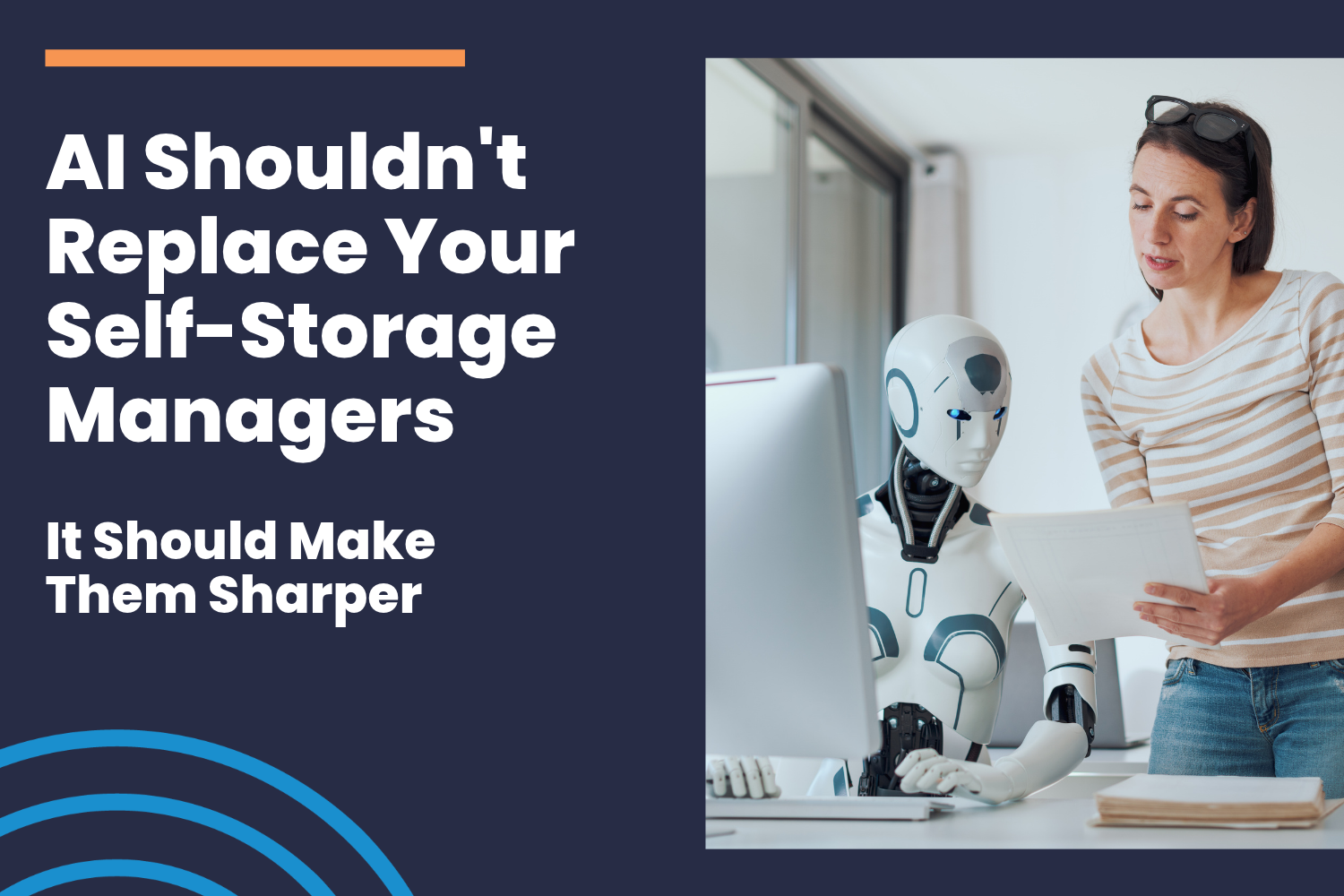
AI Shouldn't Replace Your Self-Storage Managers

Sooner or later, every operator gets asked the same question: What are we doing with AI?
It's a fair question, and labor is a fair place to look. Recovery work eats hours. Past-due calls, notices, lien deadlines and auction prep pull managers away from leasing, service and their sites. Taking that work off their plates is real money.
But there's a difference between taking work off your managers and taking managers out of the work. The first makes your operation stronger. The second quietly removes the judgment your recovery results depend on.
Here's how we think about where that line belongs.
WHAT THE DATA SEES, AND WHAT IT DOESN'T
Intelligent software is genuinely better than people at some parts of recovery. It can look across every past-due account in a portfolio at once and see patterns no one person can: who's likely to pay, who's starting to slip, when outreach tends to land and what offer tends to work.
That's what Ai Lean’s Smart Collections is all about. It recommends who to reach, when, and what to offer on every account, so your team isn't guessing.
What the data can't see is the person behind the account. A manager knows the tenant who has rented for eight years and just hit a hard patch. They can hear things on a phone call that a payment history will never show. They know their site, their community and their customers.
The best recovery happens when both are working together. The platform points the way. The manager makes the call.
THE WORK THAT NEVER NEEDED A PERSON
Then there's the work that never needed a manager's judgment, only their time:
Guessing which past-due accounts to call today, and in what order
Writing and sending the same notices over and over
Tracking lien deadlines that change from state to state
Prepping auction photos and paperwork
None of it calls for discretion. All of it needs to be done right and on time. That's where the platform should carry the load.
“Before Ai Lean, missed auctions and inconsistent practices were too common. With Ai Lean’s structured processes and regular follow-ups, Storage Star’s team has embraced a culture of accountability. Managers who once struggled with manual tasks are enjoying more time to focus on growth drivers like sales and customer service.”
HOW WE DRAW THE LINE
We built Ai Lean, the first intelligent recovery platform for self-storage, around a simple rule. If the work is repetitive, deadline-driven or a prediction made at scale, the platform carries it. If it needs empathy, discretion or accountability, a person keeps it.
That rule runs through the whole recovery lifecycle, from day one to day done:
Smart Collections recommends the right move on each account. Your manager makes the call and has the conversation.
Lien Compliance runs the legal process with state-specific rules and a complete audit trail, so your team isn't tracking it by hand.
When a unit has to go to auction, the account, documents and history carry straight through. Nothing starts over.
When a situation gets genuinely tricky, like an abandoned vehicle, attorneys work alongside the platform to advise.
We didn't try to automate the judgment out of the process. We built the process around it. And we build the product with operators, not just for them, because the people doing the work are the ones who know where the line should be.
We arm your managers. We don't replace them.
WHY THIS MATTERS ON THE P&L
For an operations leader, this is a results-oriented question.
Take the people out and you lose the judgment that decides whether a past-due account turns into a payment or a lien. Keep the people and take the busywork off them, and you get both sides of the equation: you recover more, reduce risk and reclaim time for leasing, service and site standards.
It also means your recovery results stop depending on one exceptional manager at each site. The platform brings consistency. Your managers bring the judgment.
“Ai Lean takes the stress and worry off managers. We’ve got a second set of people who know the legal process and tell us exactly what we need to do.”
That isn't really about software at all. It's about a manager who no longer feels alone with the hardest part of the job.
FIVE QUESTIONS TO ASK ANY AI VENDOR
If you're evaluating AI for your operation (and you should be), these are the questions worth asking every vendor. Including us.
1. When your system makes a recommendation, who makes the final decision?
2. What can your system see that my team can't, and what can my team see that it can't?
3. What happens when a situation doesn't fit the rules? Who do I call?
4. After rollout, what comes off my managers' plates, and what stays on them?
5. Can I talk to a manager who uses it every day, not just the executive who bought it?
If a vendor can't answer the second question clearly, keep asking. The answer tells you whether they've thought about where the line belongs, or whether they've just drawn it wherever it cuts the most headcount.
That's the line we've drawn. We'd love to show you where it falls in your operation.
Don't let AI replace your people. Let it make them unstoppable.
See How Ai Lean Arms Your Managers
Book 30 minutes with our team. Bring the hard questions, and we’ll show you exactly what comes off your managers’ plates and what stays with them.
FREQUENTLY ASKED QUESTIONS
Q1: How should self-storage operators evaluate AI vendors?
Look past the feature list and ask how the technology changes your team's work. Good questions include: who makes the final decision when the system makes a recommendation, what happens when a situation doesn't fit the rules, what comes off a manager's plate after rollout and what stays, and whether you can speak with a manager who uses the product daily. If every answer points toward removing staff, that's a signal about the vendor's priorities. The strongest solutions make your existing team more effective.
Q2: Will AI replace self-storage managers?
It shouldn't, and the best tools aren't designed to. Managers bring judgment that software can't replicate, like knowing which tenant is having a hard month and which one is avoiding the call. The right role for AI and automation is clearing repetitive, deadline-driven work so managers can spend their time on tenants, sales, training and site standards. Ai Lean's approach is to arm managers, not replace them.
Q3: What self-storage tasks should be automated?
The best candidates are repetitive, deadline-driven tasks that need to be done correctly every time: prioritizing past-due accounts, timing outreach, generating and sending lien notices, tracking state-specific deadlines, preparing auction documentation and following up on no-show winning bidders. These tasks consume hours without needing a person's judgment. Decisions about payment arrangements, sensitive tenant conversations and unusual legal situations should stay with your team.
Q4: What does "human in the loop" mean for self-storage collections and lien compliance?
It means technology handles the repeatable work and recommends next steps, while people make the decisions that require judgment. In Ai Lean's platform, Smart Collections recommends who to reach, when and what to offer, and the manager makes the call. For complex legal situations, such as abandoned vehicles, attorneys work alongside the platform to advise. The process is built around human judgment rather than designed to remove it.
Q5: What is an intelligent recovery platform?
An intelligent recovery platform manages the full lifecycle of a past-due self-storage account in one system, from the first missed payment through collections, lien compliance, auction and returning the unit to rentable inventory. Ai Lean is the first intelligent recovery platform for self-storage, connecting to an operator's facility management software through one connection. Its tagline sums up the scope: from day one to day done.
Continue Reading